the Black Man
The Black Man is a figure of diabolical temptation in the folklore of Puritan New England, invoked throughout The Scarlet Letter as a symbol of secret sin, damnation, and the forest's lawless power. He appears not as a character but as a pervasive cultural myth—a dark tempter who roams the woods with a great book in which sinners sign their names with their own blood, leaving an indelible mark upon their bosoms. The novel uses this figure to dramatize the characters' inner guilt, their fear of exposure, and the boundary between public righteousness and hidden transgression.
Origins and Cultural Context
The Black Man belongs to the common superstition of the period, a story passed down among the townspeople and told to children by old dames in chimney corners. According to the legend, he haunts the forest carrying a big, heavy book with iron clasps, and offers an iron pen to everyone he meets among the trees; those who accept must write their names with their own blood, after which he sets his mark on their bosoms. The figure is closely associated with the forest itself—the wild, heathen, untamed wilderness that lies beyond the Puritan settlement, a place where human law does not reach and where, as Hester Prynne reflects, the "wildness of her nature might assimilate itself with a people whose customs and life were alien from the law that had condemned her." The Black Man thus embodies the moral and spiritual dangers that the Puritan community projects onto the natural world beyond its borders.
The Black Man and the Characters
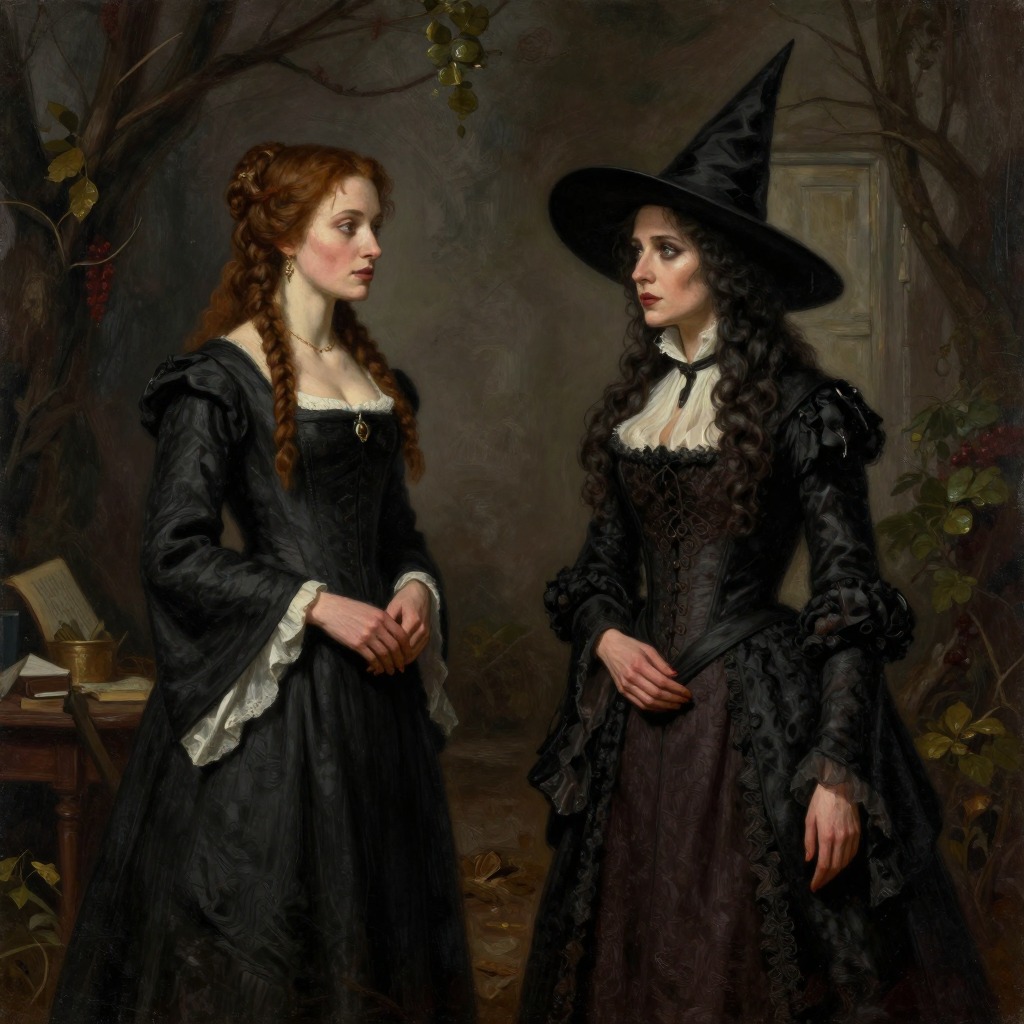
For Hester Prynne, the Black Man is a figure she explicitly invokes to explain her own condition. When little Pearl asks whether she has ever met him, Hester answers, "Once in my life I met the Black Man! This scarlet letter is his mark!" This confession, made in the forest, equates the scarlet letter with the diabolical brand of the tempter, acknowledging that her public shame is the visible sign of a transaction with evil. The association is reinforced by the old dame's tale that the scarlet letter glows like a red flame when Hester meets the Black Man at midnight in the dark wood. Mistress Hibbins, the Governor's sister and a reputed witch, claims to know the Black Man intimately and invites Hester to join her in the forest: "Wilt thou go with us to-night? There will be a merry company in the forest; and I well-nigh promised the Black Man that comely Hester Prynne should make one." Hester's reply—that she would willingly have signed her name in the Black Man's book with her own blood had Pearl been taken from her—reveals how close she has come to embracing the devil's party as a consequence of her isolation and despair.
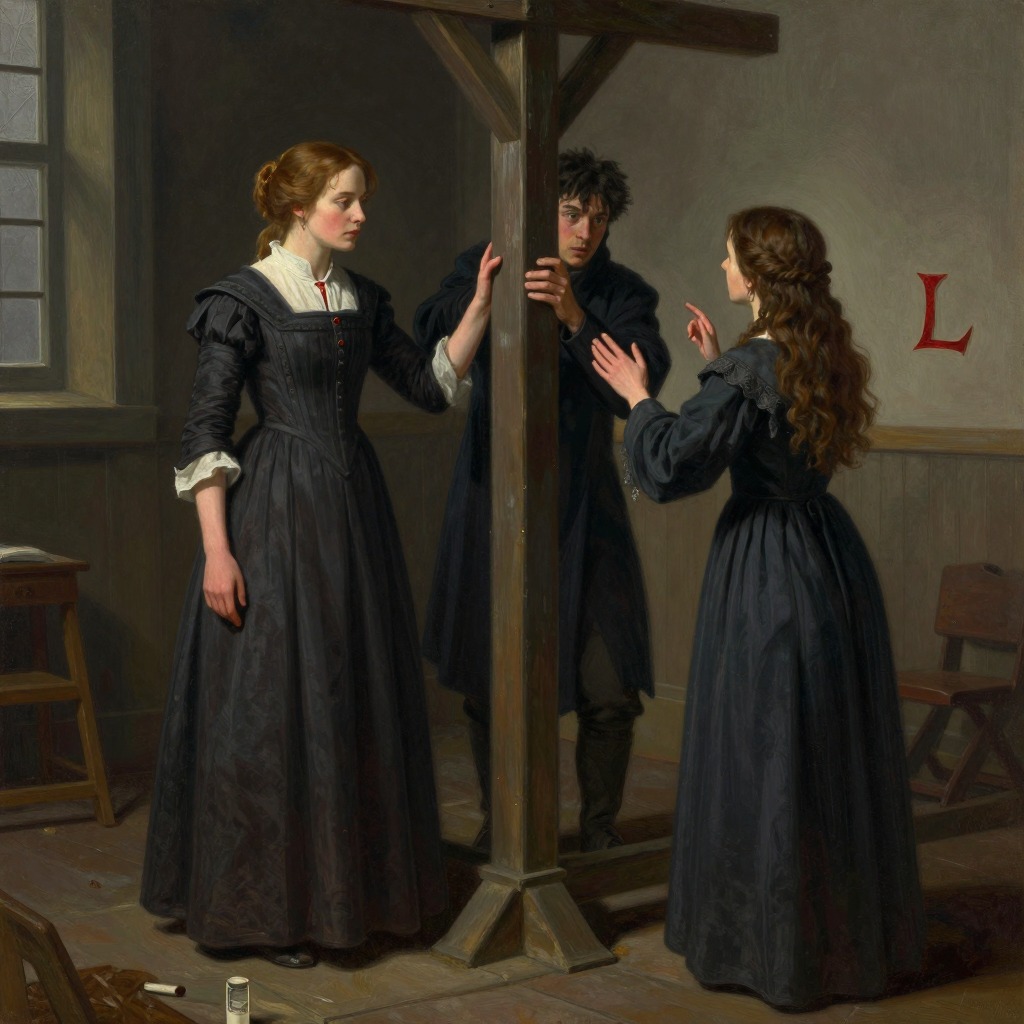
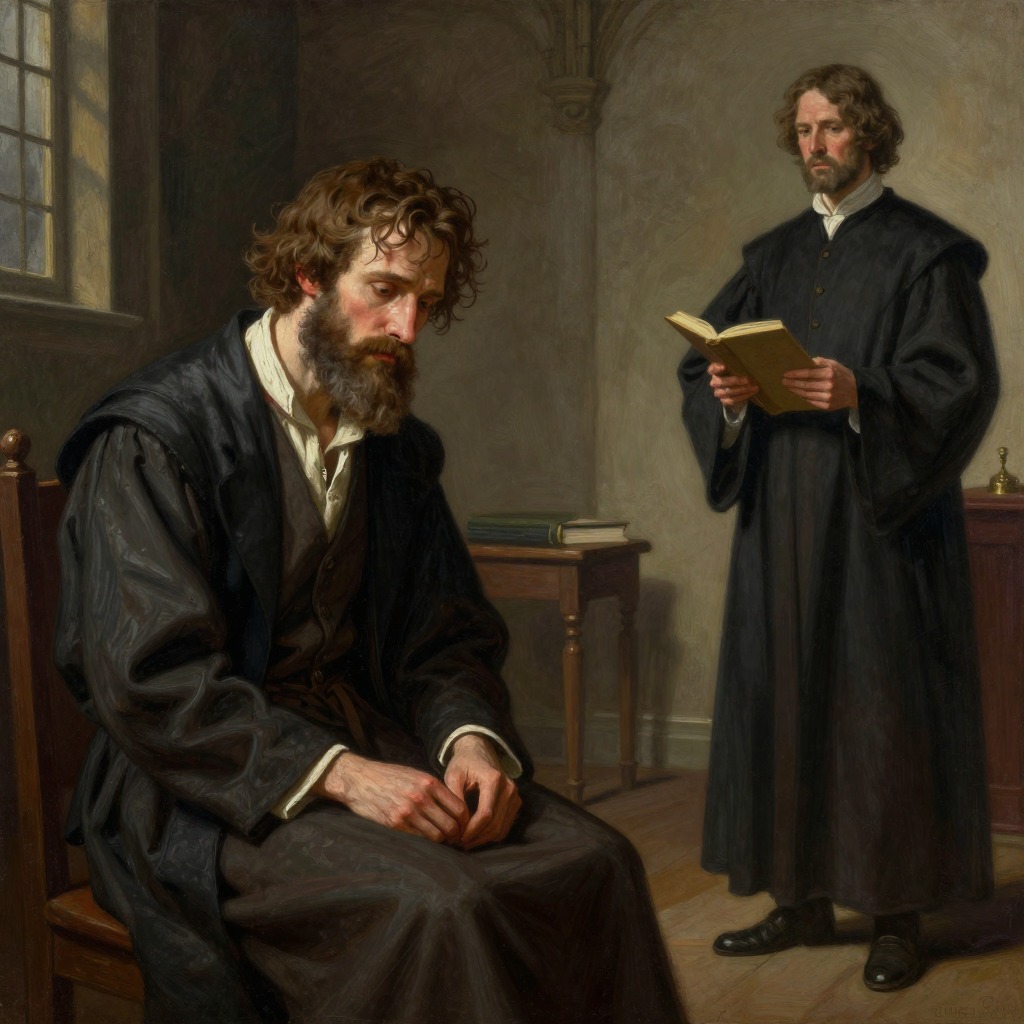
Arthur Dimmesdale, the tormented minister, is also linked to the Black Man through the perceptions of others and his own guilty imagination. Pearl, with her uncanny insight, asks her mother whether the minister keeps his hand over his heart because "when the minister wrote his name in the book, the Black Man set his mark in that place." She wonders why he does not wear the mark outside his bosom as Hester does, pointing to the difference between open shame and hidden guilt. Mistress Hibbins, speaking to Hester in the marketplace, declares that when the Black Man sees one of his own servants "so shy of owning to the bond as is the Reverend Mr. Dimmesdale, he hath a way of ordering matters so that the mark shall be disclosed, in open daylight, to the eyes of all the world." This prophecy anticipates the minister's final revelation on the scaffold, where he tears open his clerical band to reveal—whether literally or symbolically—the scarlet letter imprinted on his own flesh.
The Black Man as a Symbol of Hidden Sin
The Black Man functions throughout the novel as a cultural shorthand for the secret guilt that the Puritan community both fears and obsessively seeks to expose. He represents the possibility that anyone, even the most revered minister, may have signed his name in the devil's book. The forest, as his domain, becomes the space where such transactions occur—a place outside the watchful eye of the town, where the characters can speak truths they dare not utter in the marketplace. When Dimmesdale emerges from his forest meeting with Hester, he is tempted by a series of wicked impulses that he himself interprets as evidence of a pact with the fiend: "Did I make a contract with him in the forest, and sign it with my blood? And does he now summon me to its fulfilment?" The Black Man thus serves as a figure through which the novel explores the psychology of guilt, the terror of exposure, and the ambiguous boundary between sin and redemption. He is the shadow that falls across every act of concealment, the name given to the force that drives sinners toward confession or toward deeper damnation.